Skip to content
All products
In development Restaurants 2026

One system for running the room

Most restaurants take bookings in three places and keep them in a fourth. Something arrives from the website, something else from the phone, a regular texts the manager directly, and by six o’clock somebody is redrawing the floor on a paper diary with a pencil. Tablecraft holds the whole service in one place — the bookings, the tables, the people at them, and what it all added up to by the end of the week.

tablecraft.app/dashboard
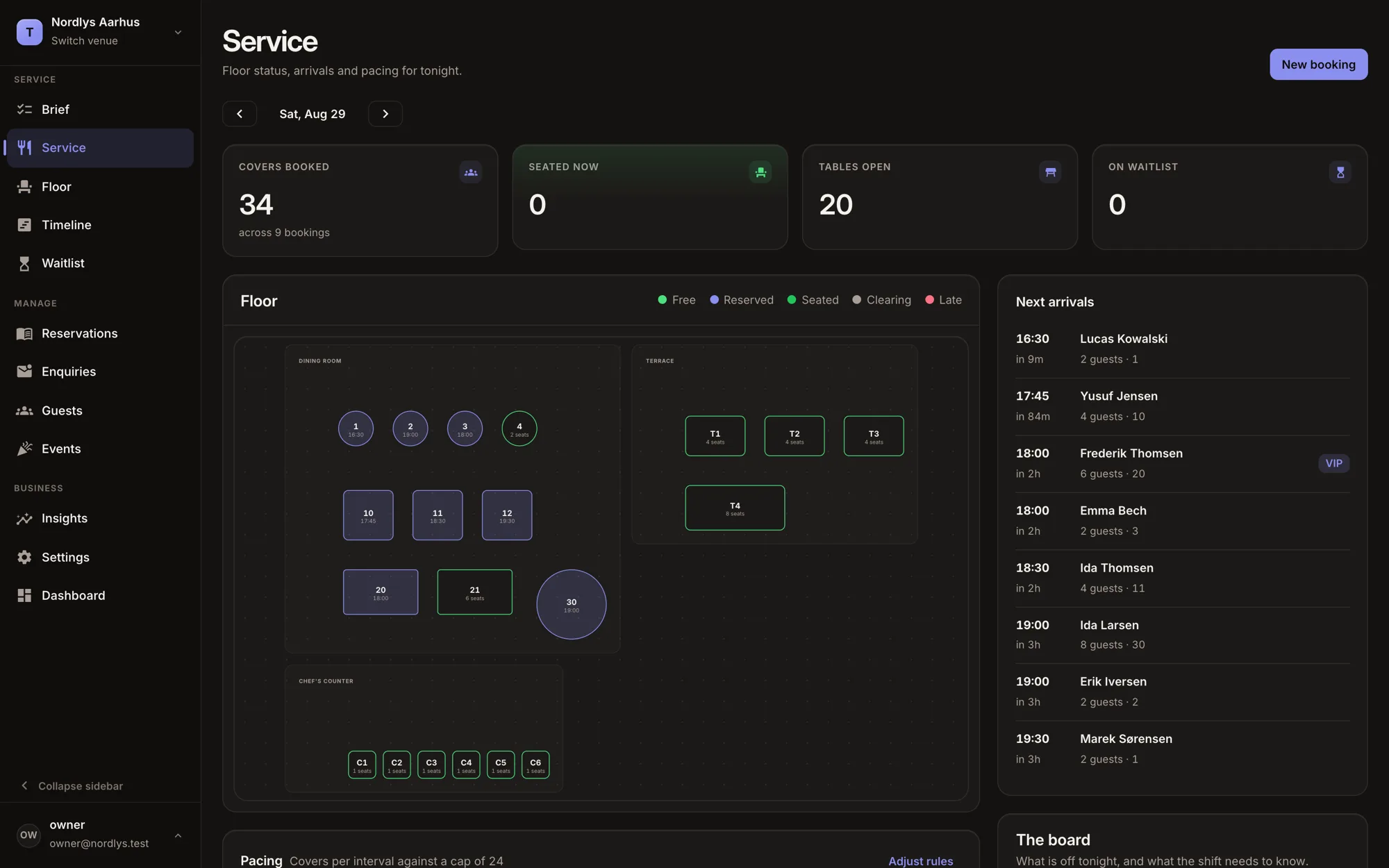
Tablecraft’s service screen, showing covers booked, tables open, the floor plan and tonight’s arrivals side by side.

All in one place

  • Your own booking page
  • The floor plan
  • Walk-ins and the waitlist
  • Guest history
  • Deposits and no-shows
  • Large-party enquiries
  • Ticketed sittings
  • The week in numbers

01 The problem

A full book is not the same thing as a good service. A restaurant can be fully booked and still have four empty tables at eight o’clock, because everyone was seated at seven and the kitchen was buried. The tools most places use will happily take that booking: they are diaries, and a diary does not know how long a table of eight sits for, how many people the kitchen can start at once, or that the party who booked the terrace has been given the table by the pass. Tablecraft is built around the part that actually decides whether a night runs well — what will genuinely fit, and where.

02 What it does

Everything a service needs, in one place

Take bookings that will actually fit

It works out how long a two sits compared with an eight, how many people the kitchen can start in the same half hour, and which table wastes the fewest empty seats — then offers only the times that hold up. Two guests taking the last table at the same moment can never both get it.
The room, live on every screen

Seat a party on the host stand and it changes on the tablet at the pass a second later, with no refresh. The floor shows how long each table has been sitting, and says so plainly when one is running past the time the kitchen planned for it.

Walk-ins in one tap

Tap a free table, say how many are standing there, and they are seated. A name is offered and never required, because the person in front of you is waiting.

Everyone who has eaten with you

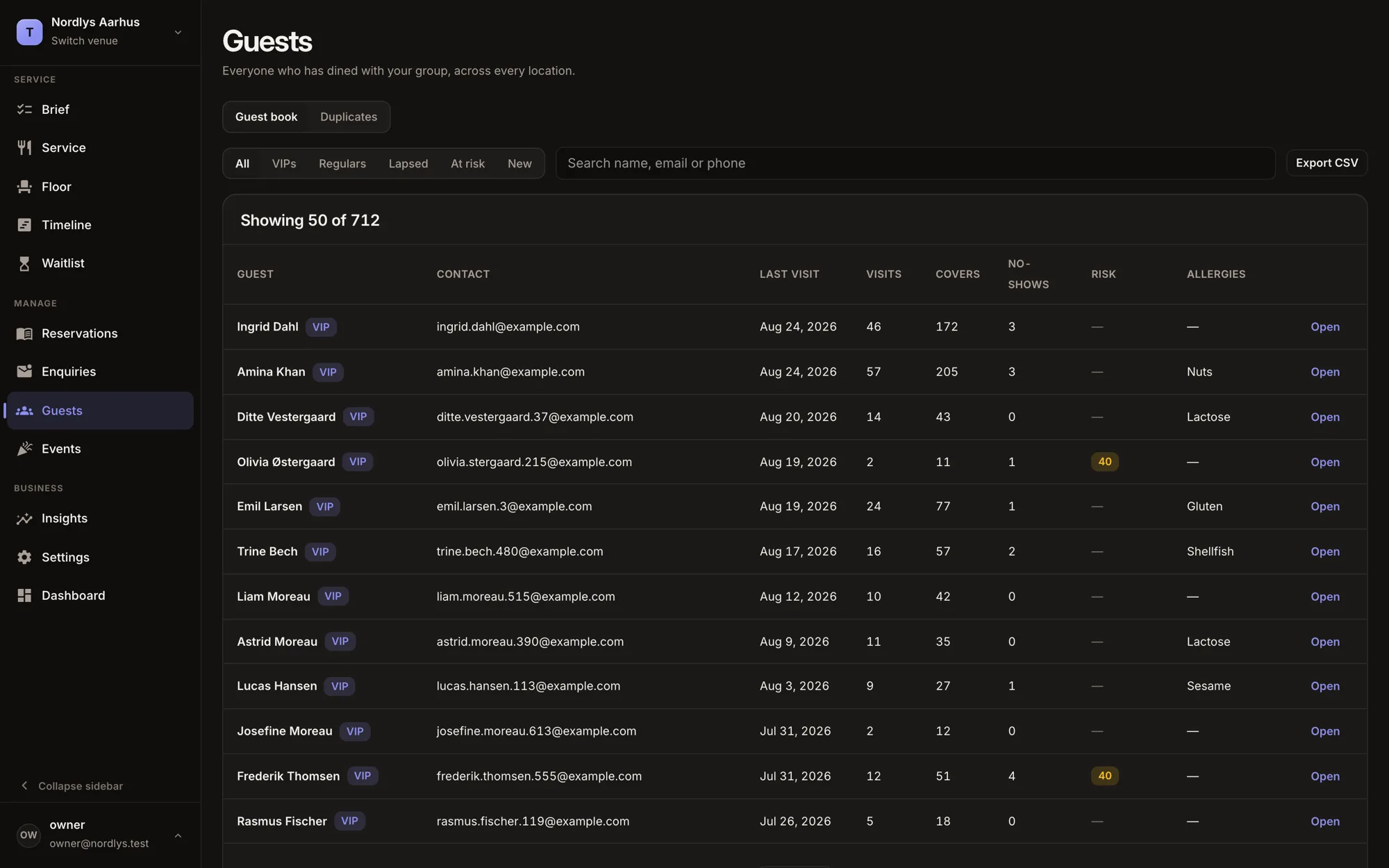
One record per guest, shared across every location you run — allergies, the occasion, how often they come, and how often they do not turn up. A regular at one restaurant is recognised at the other.

Ask for a card only when it is worth it

Asking every guest for a deposit costs you bookings. Tablecraft asks the ones whose own history says it is warranted, releases the hold the moment they sit down, and lets you charge it if they never arrive.

Monday morning, in your inbox

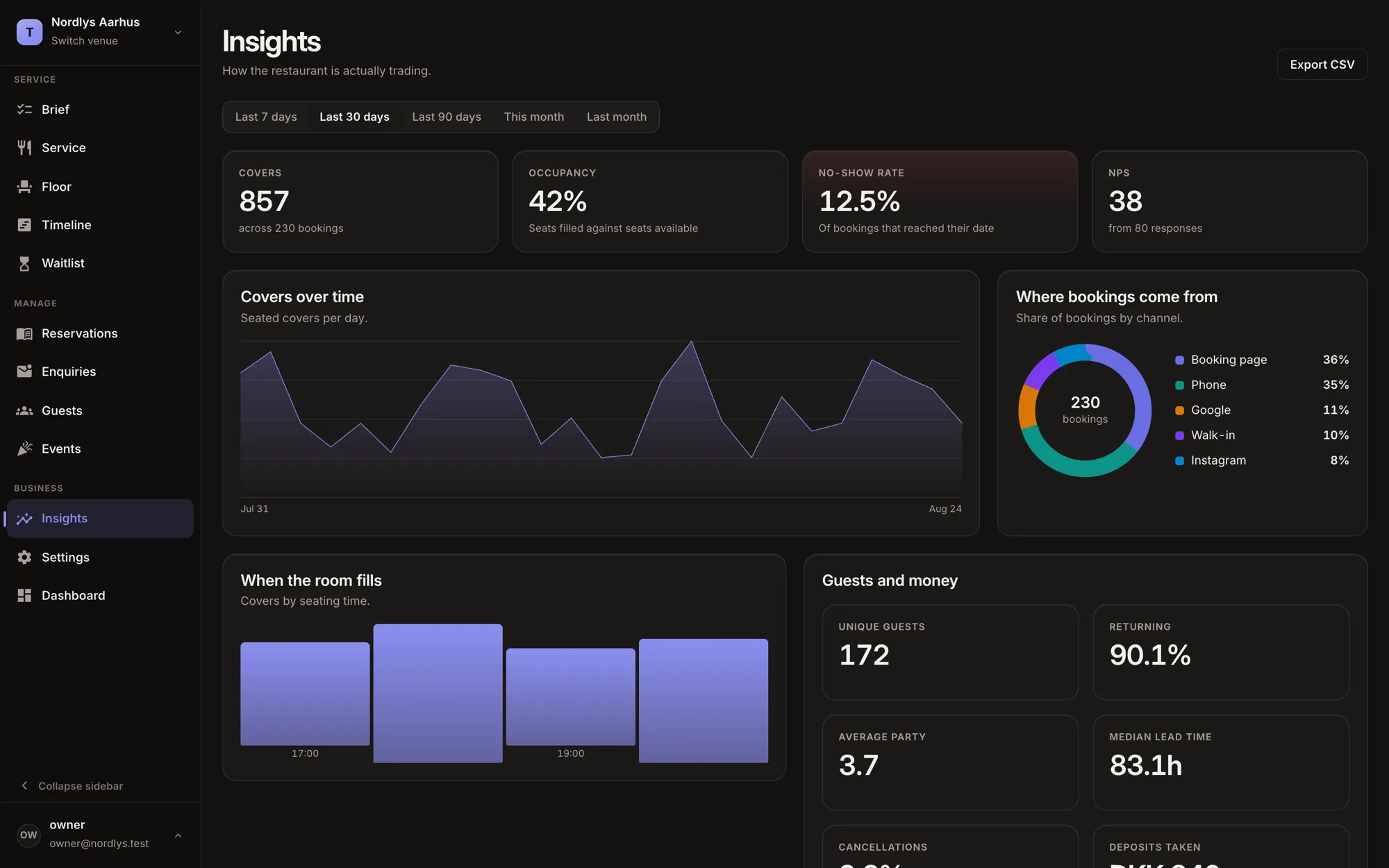
Covers, how full the room really was, no-shows, what guests said afterwards and where the bookings came from — emailed to the people who own the place, because the screen is excellent and an owner does not open it.

03 Details that matter

The things most software gets wrong

01

The last booking of the night is still tonight

A table sat at half past midnight belongs to Saturday’s service, not to Sunday’s. Tablecraft counts a service the way the staff working it do, so the book, the takings and the next morning’s numbers all agree about which night a late table belonged to.

02

The host is always allowed to overrule it

Sometimes you seat the party anyway. A system that forbids that gets worked around on paper by the second week, so Tablecraft lets a host insist — and quietly writes down who did, and when, so a manager can see on Monday why Saturday ran the way it did.

04 A look inside

Real screens, real service

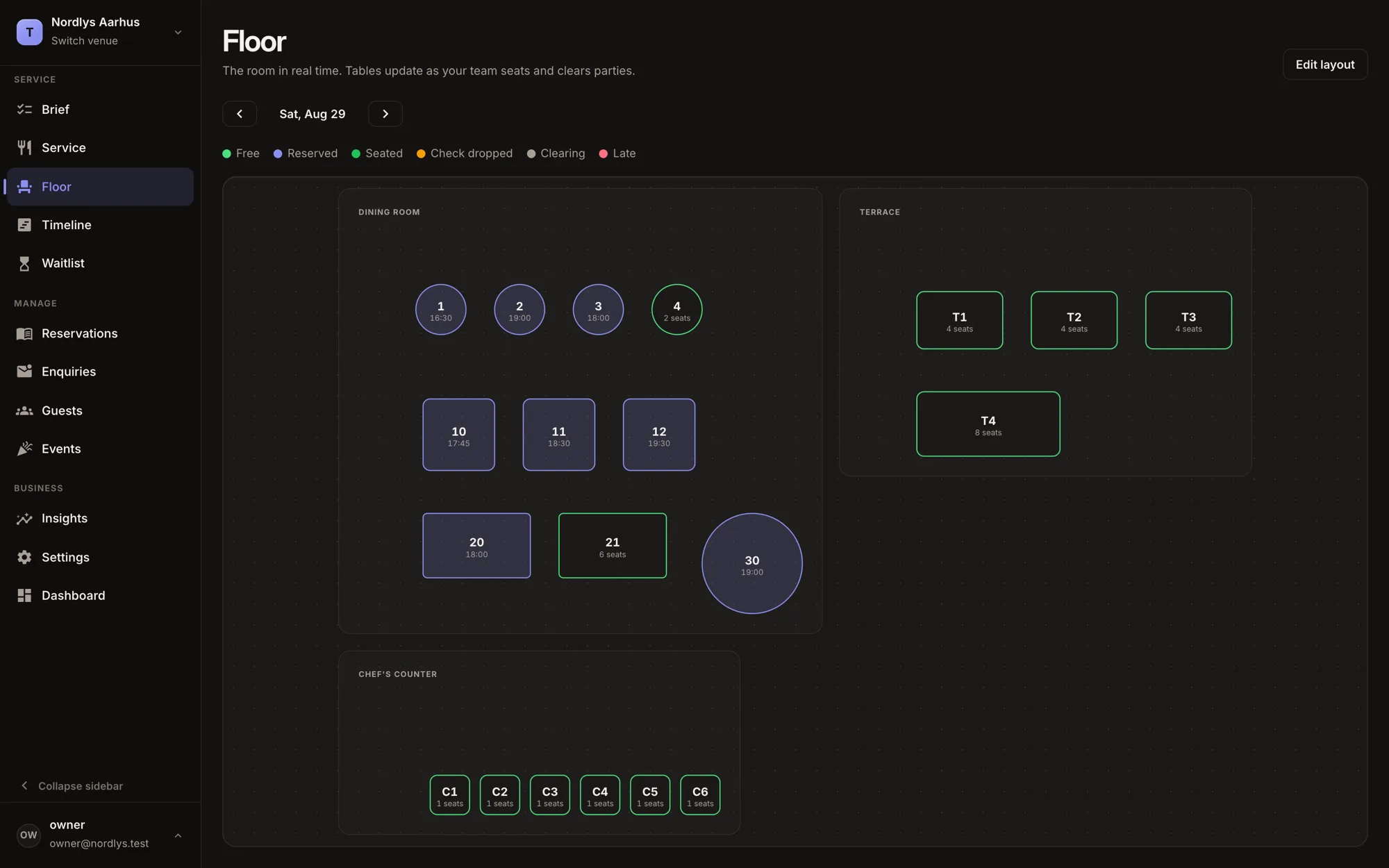
Tablecraft’s floor plan showing dining room, terrace and chef’s counter with tables coloured by status.
01

The room as it really is, updating live. Colour says what is happening on each table; the caption says how long they have been there.

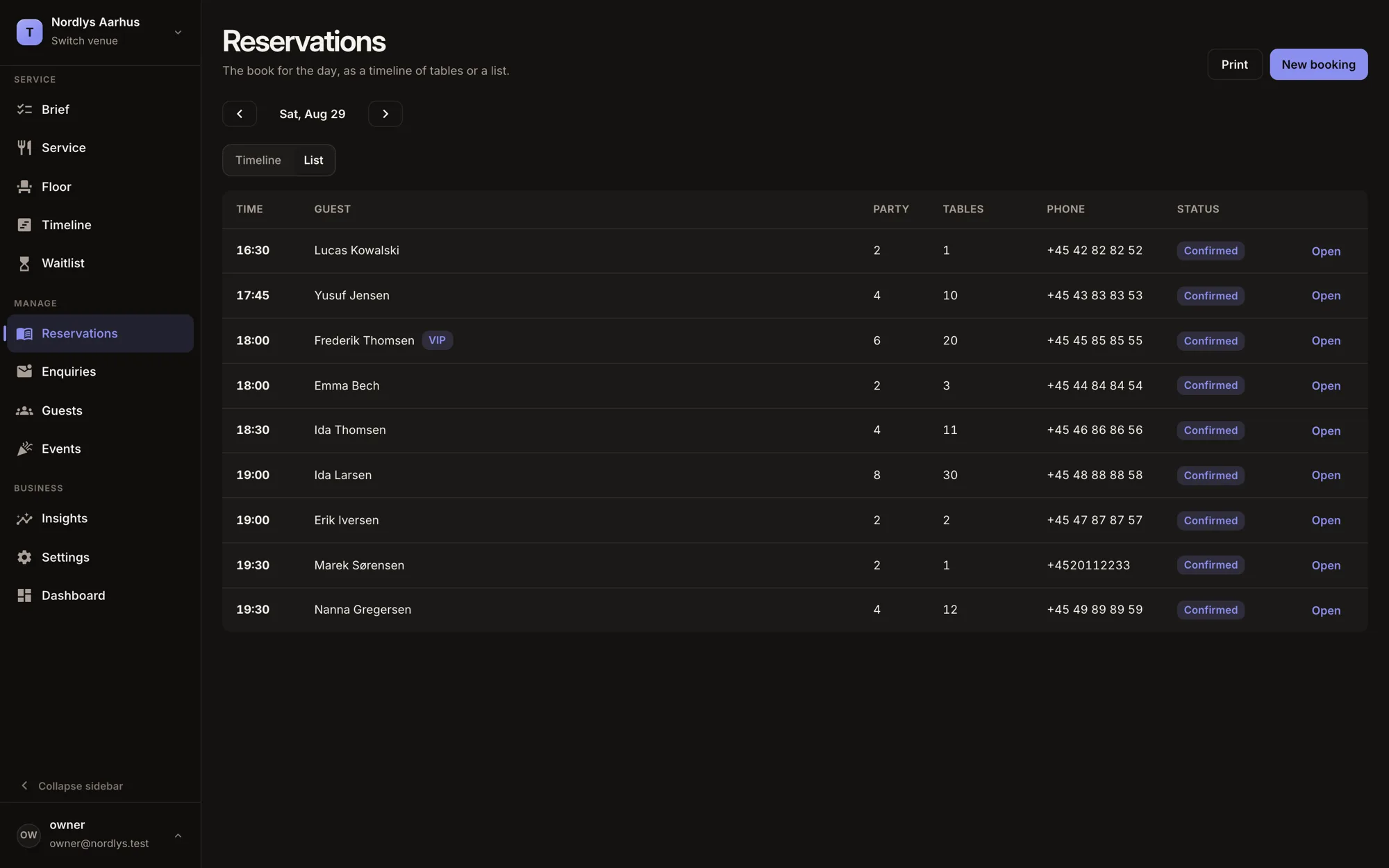
Tablecraft’s reservations list showing times, guests, party sizes, tables and status.
02

The book for the day — as a list for the phone, or as a timeline when you need to see where the night stacks up.

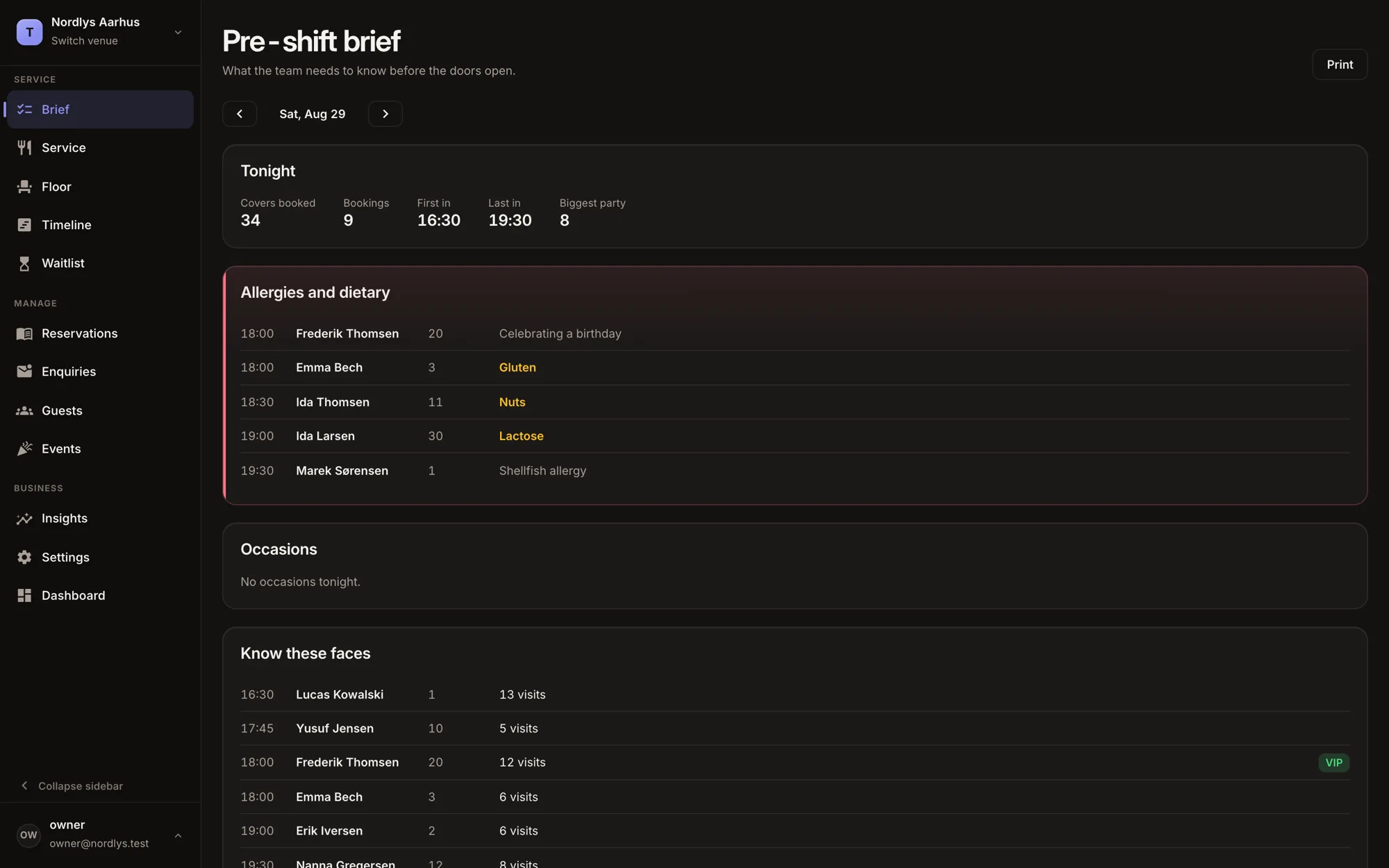
Tablecraft’s pre-shift brief, with an allergies panel highlighted above sections for regulars and large parties.
03

The pre-shift brief. Allergies first, because it is the one thing on the page where being wrong matters more than a bad review.

Tablecraft’s guest book listing diners with visit counts, last visit, allergies and risk.
04

The guest book, shared across every location — visits, covers, allergies, and who has a history of not turning up.

Tablecraft’s insights screen with covers over time, booking sources and guest metrics.
05

How the restaurant actually traded: covers, how full the room was, no-shows, and which channels the bookings came through.

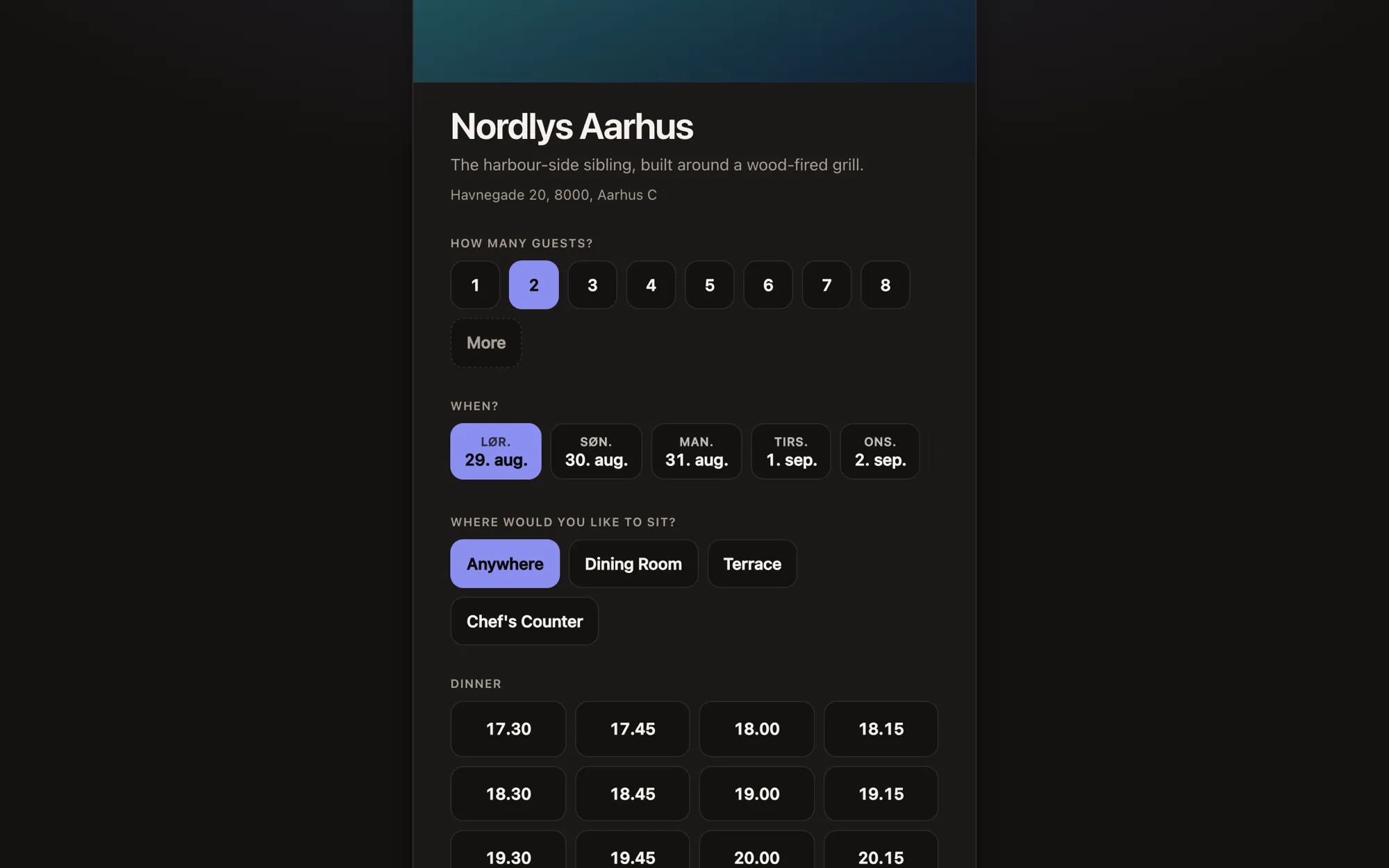
Tablecraft’s guest booking page showing party size, dates, room choice and available times.
06

What the diner sees — party, date, where they would like to sit and a time, on one screen with no account to create.

We can build this for your business

Tablecraft is what we do when the brief is our own. Tell us yours — we'll come back with a clear plan.

Start your project
↑↓ to move ↵ to open